How to Track Calories in Homemade Meals
Learn how to track calories in homemade meals using ingredient totals, the cooked batch weight, and the portion you actually serve.
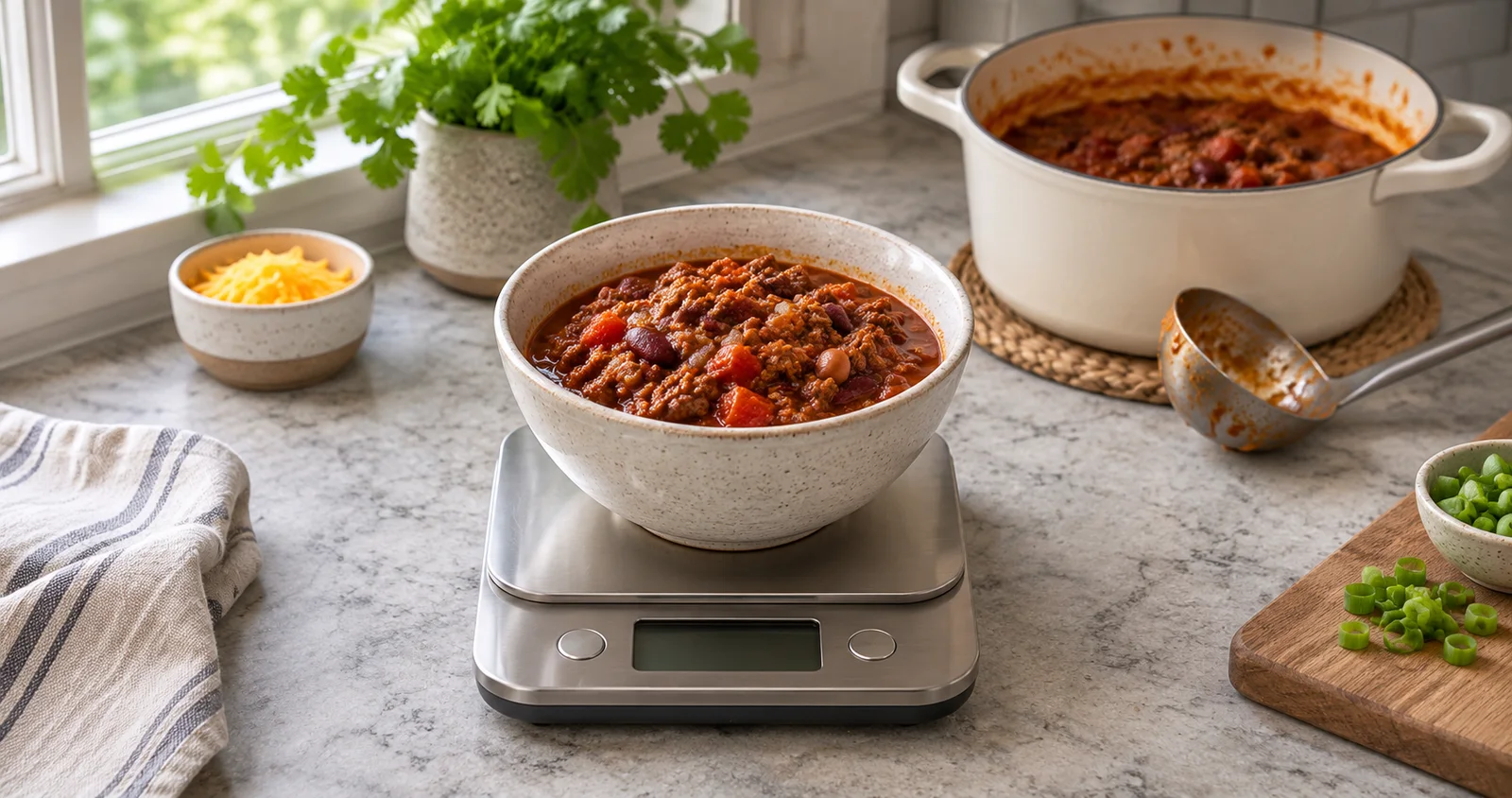
To track calories in a homemade meal, add up the calories in the ingredients, then log the share of the finished recipe you ate. If your bowl holds a quarter of a well-mixed pot of chili, it contains about a quarter of the recipe’s calories. For unequal portions, weigh the whole cooked batch and your serving.
Add up the ingredients before cooking
- Write down how much goes in. Include the oil, sauces, and other ingredients that end up in the dish. Count toppings such as sour cream or shredded cheese separately if everyone adds their own.
- Convert the label to the amount you used. A can that lists 120 calories per 130 g serving contributes 240 calories if you use 260 g and the label applies to the food as measured. The FDA’s guide to the Nutrition Facts label explains how label calories relate to serving size.
- Match the database entry to the ingredient you measured. Use the package label when available. For unpackaged ingredients, try USDA FoodData Central and match the entry to the food’s state. Dry pasta, cooked pasta, and drained beans have different weights for the amount of food they represent.
If you drain off fat or leave a substantial amount of sauce in the pan, the full ingredient total can overstate what you ate. Mark it as an estimate when you can’t tell how much was discarded.
Calculate calories per serving
For equal portions, divide the recipe’s calories by the number of portions you actually made. If a recipe says it serves six and you divide it among four equal containers, use four.
For unequal portions of a well-mixed recipe, weigh the finished food without the pot. You can zero the scale with an empty bowl before transferring the food, or subtract the weight of the empty pot from the weight of the full pot if your scale can handle it.
Calories in your serving = total recipe calories × serving weight ÷ total cooked food weight.
| Example from one pot of chili | Amount |
|---|---|
| Calories in the ingredients, based on labels and database entries | 1,800 calories |
| Finished chili, without the pot | 1,500 g |
| Chili ladled into your bowl | 350 g |
| Estimated calories in that bowl | 420 calories |
The example works out to 1.2 calories per gram, so a 250 g bowl from the same pot would be about 300 calories before toppings. Stir before serving so the beans, meat, and liquid are distributed. For meals with separate components, such as chicken and rice, estimate each item on the plate instead.
Use the cooked weight for portions
If you weighed dry pasta before boiling, use the dry pasta label to estimate the calories it adds to the recipe. When serving the finished pasta dish, divide the cooked serving weight by the cooked batch weight. Water absorbed or lost during cooking changes the weight and the calories per gram.
For leftovers from the same batch, save the calories per gram or per 100 g with the recipe. Weigh a portion before reheating if reheating would noticeably dry it out. Recalculate for a new batch if you change the ingredients or the final yield.
Estimate when you didn’t measure the whole batch
If you know the recipe but didn’t weigh the pot, use a rough share of the batch, such as one of four similarly filled containers. If the ingredients are unknown, an entry for a comparable cooked dish gives you a starting point. FITRO can also estimate calories from a meal photo. Review the suggested portion and account for any toppings you added.
When you order a meal instead of cooking it, use our guide to tracking calories when eating out to handle menu listings and shared dishes.