How to Estimate Calories in Homemade Roti
Estimate calories in homemade roti from the dry atta, divide a shared batch by dough-ball weight, and account for ghee or oil.
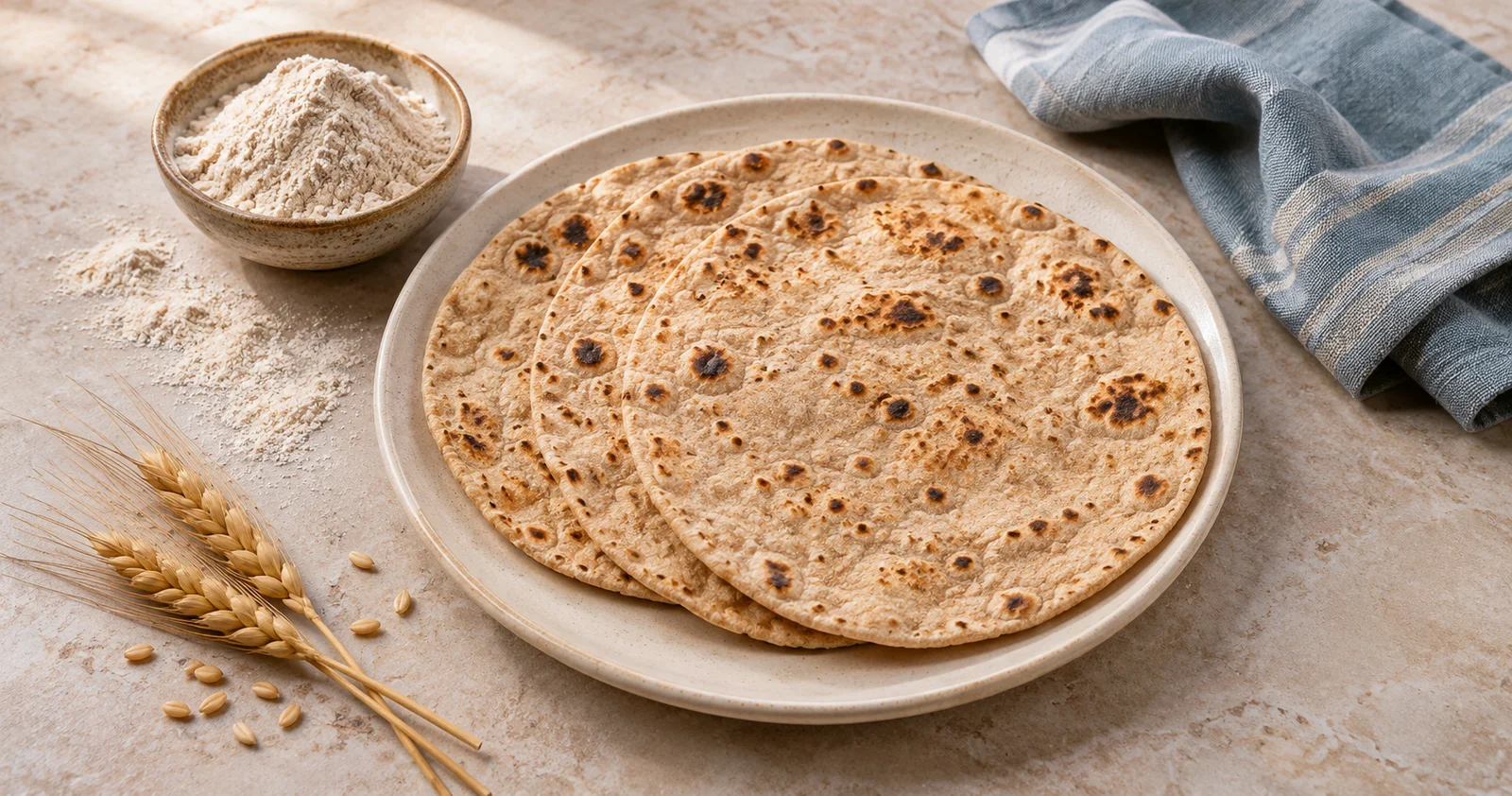
Start with the dry atta and any oil or ghee that goes into the dough. Calculate the energy in the batch, then divide it among the rotis. If you make six equal rotis from 240 g of atta and the bag lists 340 kcal per 100 g, each plain roti comes to about 136 kcal. Use the numbers on your own bag for your batch.
Plain water adds weight, so the gram weight of a wet dough ball or a cooked roti cannot be entered as the same number of grams of dry flour. The Pakistan Dietary Guidelines illustrate the difference with one reference chapatti made from 60 g of dry flour that weighs 80 g cooked. Your recipe and cooking method can produce a different result.
If the rotis are the same size
- Weigh the dry atta before adding water. If you use two types of atta, weigh them separately and use each bag’s label.
- Calculate the batch energy. For a label stated per 100 g, multiply the grams of atta by the kcal per 100 g and divide by 100. If the label gives kcal per serving, multiply the grams of atta by the kcal per serving, then divide by that serving’s weight in grams. FDA guidance on label calories
- Add the energy from any oil or ghee mixed into the dough. If you brush ghee onto only some rotis, count it for those rotis separately.
- Divide by the number of equal rotis the measured batch makes.
| Step | Example |
|---|---|
| Dry atta | 240 g |
| Energy on this example label | 340 kcal per 100 g |
| Dough energy before any topping | 240 × 340 ÷ 100 = 816 kcal |
| Six equal rotis | 816 ÷ 6 = 136 kcal each |
An Indira Gandhi National Open University exercise uses the same basic ingredients-and-yield approach for chapati and paratha. For a batch with substantial extra atta for rolling, count the flour that sticks to the rotis. Flour left on the board stays out of the estimate.
If the dough balls are different sizes
Use each ball’s share of the whole dough. Weigh the mixed batch and your ball at the same stage, before rolling and cooking. If the dough is evenly mixed, a ball that is one-fifth of the dough carries about one-fifth of the batch’s energy.
Estimated kcal per roti = batch kcal × dough-ball weight ÷ total dough weight. Add any topping you use on your own roti separately.
If the 816 kcal batch above weighs 400 g after kneading, an 80 g dough ball gives about 163 kcal because it is one-fifth of the dough. A 50 g ball from that same batch gives about 102 kcal. Use the full batch weight even if you cook only part of it and save the rest for tomorrow.
If the roti is already cooked
If you know the batch ingredients and the rotis were made about the same size, use the batch average. If nobody knows how much atta or fat went into them, choose an entry for a similar cooked plain roti and use its cooked weight if available. Treat that as a rough estimate, especially when the entry does not specify whether it includes ghee.
For rotis you make the same way most weeks, measure one batch and save the result as your usual estimate. Recalculate when the recipe, dough-ball size, or amount of ghee changes substantially. If you use FITRO to scan the rest of your meal, review the suggested roti portion against your batch estimate before logging it.