How to Track Calories When Eating Out
Learn how to log restaurant meals using menu calories, comparable dishes, and the portion you actually ate, even without nutrition info.
To track calories when eating out, first look up the restaurant's nutrition information for your exact order. When there is no listing, use a comparable dish or estimate the parts of the meal. Then log the portion you ate, including any sides, drinks, and toppings that the main entry leaves out.
If the restaurant lists calories
Match the listing to the size and version you ordered. Look for a nutrition page, a PDF, or the restaurant's ordering site if the printed menu only gives a range. A range can reflect different sides, sizes, or ways to customize the dish. Look for the option you chose before picking a number from the range. FDA guide to calories on menus
In the U.S., federal rules cover standard menu items at qualifying chains with at least 20 locations. An independent restaurant may offer nutrition information voluntarily, so its website or menu is still worth checking. FDA menu labeling requirements
| What you see | What to log |
|---|---|
| A calorie count for an entrée or combo | Check which side, drink, and dressings it includes. Add only the extras you ate that are outside the listing. |
| A range beside the dish | Look up the size or options that explain the range. If you still have only the range, log a rough estimate and keep a note of what you ordered. |
| Calories per slice or serving | Multiply by the number of slices or servings you ate. Check whether a listing for a whole order already includes several servings. |
If calories are missing from the menu
Look for a comparable prepared dish in your tracker or USDA FoodData Central. Match the portion, cooking method, and main ingredients as closely as you can. A creamy pasta dish and a tomato-based pasta dish will be poor substitutes for each other, even if they use the same pasta.
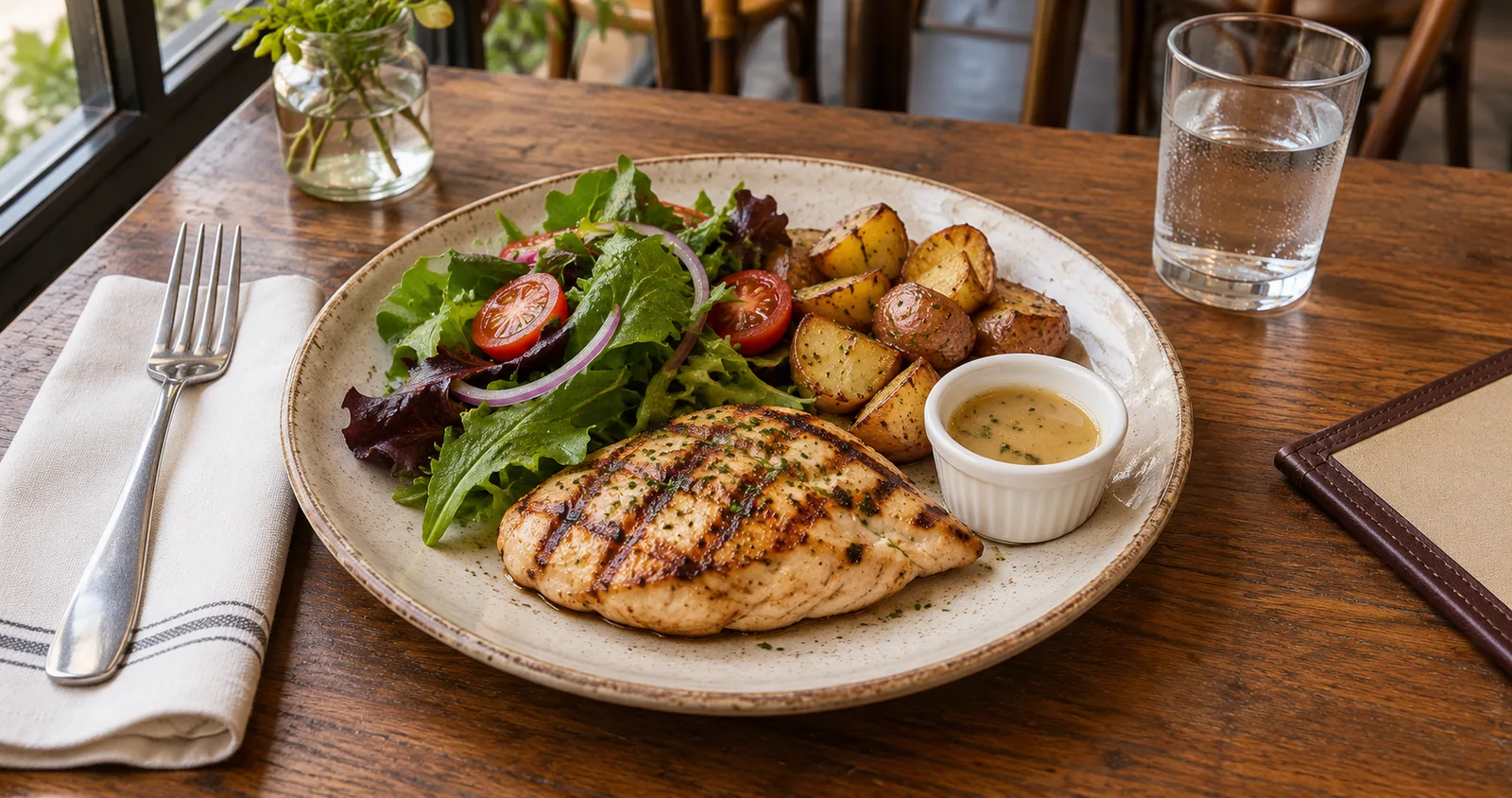
When a single match is hard to find, log the main components. For a plate with grilled chicken, roasted potatoes, and greens, look up those three items in the portions you roughly ate. Check whether those entries already include cooking fat, and log dressing separately if it was served on the side and is missing from the entry. For a mixed dish like a casserole, one comparable prepared dish may be more useful than guessing the amount of every ingredient.
Account for sharing and leftovers
Use the fraction of the order you actually ate. Suppose the restaurant lists a sandwich at 720 calories and you eat half. That is about 360 calories. If you also eat roughly a third of a shared side listed at 240 calories, add about 80 calories for an estimated 440 calories in total. Those are example menu numbers. For your own meal, log any leftovers separately when you eat them.
Fractions are most useful when the pieces are similar. If you finish the chicken and leave most of the potatoes, estimate those portions separately. You do not need a perfect number to record what you ate.
Make the next visit easier
Save the restaurant, dish, size, and any changes alongside your estimate. The next time you order it, you can reuse the entry and adjust it if the portion changes. A meal photo can help you remember what was on the plate. Fitro's photo scanner can give you a starting estimate, but check the suggested portions and any sauces or ingredients the photo may not show. Fitro's U.S. Google Play listing
If you're also trying to understand what a typical day's intake looks like, see how to estimate daily calorie needs with a desk job.